Orange USB Stick Fridge Magnet, y2k icon, room decor, gift for y2k fans
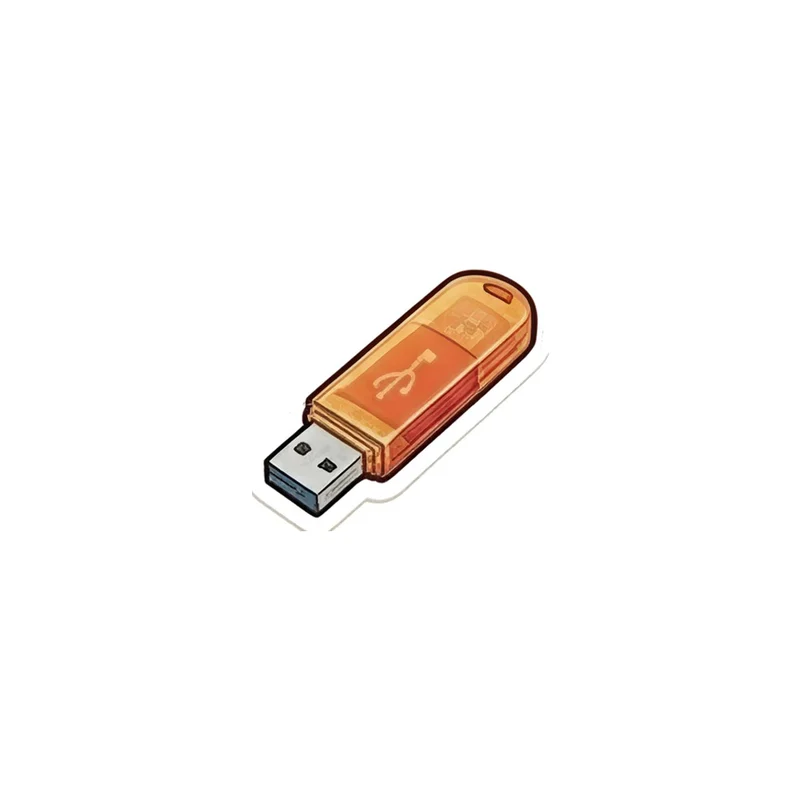
A translucent orange USB stick with a metal connector and the USB symbol on its shell. Die-cut and flexible, it sits flat on a fridge door or a locker.
When you hold it, the piece feels like a small, soft-edged version of a familiar USB drive: a compact rounded rectangle with one end shaped around the metal plug. Its orange surface is translucent, so light can pass through the colour and give the object a warm, slightly luminous appearance rather than a flat opaque one. The magnet is die-cut around the complete silhouette, including the narrower connector end, instead of being presented as a square or rectangular badge. That outline keeps the form clear in your hand and lets the object sit close to a fridge door or locker without a bulky raised edge. Flexible rather than rigid, it bends slightly between your fingers and lies flat when placed down. The artwork fills the cut shape to its edges, following the USB-stick outline so there is no unrelated border around the icon. It has the compact scale and simple graphic presence associated with early-2000s computer accessories, making it easy to recognise even when it is surrounded by notes, photographs, menus, or other magnets.
The design shows a translucent orange USB memory stick viewed from the broad shell side, with the metal connector extending from one end. The connector is rendered in a cool grey metallic tone, creating a clear contrast with the orange body and separating the functional-looking plug from the coloured casing. On the shell, the familiar USB trident symbol appears as a small, precise mark, giving the otherwise simple shape a specific piece of technology to identify. The rounded casing, straight sides, narrow neck, and exposed connector all work together as one clean icon rather than a detailed scene. Orange remains the dominant colour, while the grey plug and USB symbol provide the small accents that make the image legible at a glance. Its Y2K character comes from the subject itself: removable storage, translucent plastic, and a compact digital accessory translated into a flat decorative object. Place it on a white, silver, or brightly coloured fridge, or use it on a school, studio, or office locker where the orange silhouette can sit among everyday reminders and personal images. It also suits a desk area or bedroom display built around old technology references, pixel graphics, CDs, wired headphones, and other turn-of-the-millennium details.
After months of everyday use, the magnet continues to read as an orange USB stick first: the rounded casing remains easy to identify, the grey connector still breaks up the colour at one end, and the USB symbol gives the centre of the shell its recognisable detail. Because the artwork follows the outline rather than sitting inside a large background panel, small shifts in position do not change the overall image; it still looks intentional when moved from a fridge to a locker or rearranged with other magnets. The flexible construction keeps the piece visually low-profile, so it does not turn into a prominent protrusion as your collection grows. Everyday surroundings may change around it—shopping lists replaced, postcards moved, photos rotated—but the icon provides a steady orange accent within that changing display. Its translucent colour also responds to its setting: it appears denser against a dark surface and brighter where light reaches it, while the metal connector and USB mark remain the visual cues that anchor the design. This makes it a practical small-format decoration for regular use, as well as a gift for someone who remembers the look and feel of early digital accessories.
“A playful Y2K-style USB magnet adds a small, graphic accent to fridges, lockers, and other everyday surfaces.”
- SubjectA single translucent orange USB stick with a metal connector and USB symbol.
- Palette & lightBright translucent orange with metallic detailing and a clear background.
- CompositionOne die-cut cartoon motif, designed to sit flat against a surface.
- Where it fitsFridge doors, dorm lockers, desk areas, or as a lighthearted gift for Y2K fans.
| Material | Made from 0.5 mm flexible vinyl |
| Digital printing | |
| Care | Wipe clean with a dry cloth; keep the printed face free of scratches. |
| Shipping | Made to order — ships in 2–5 business days |